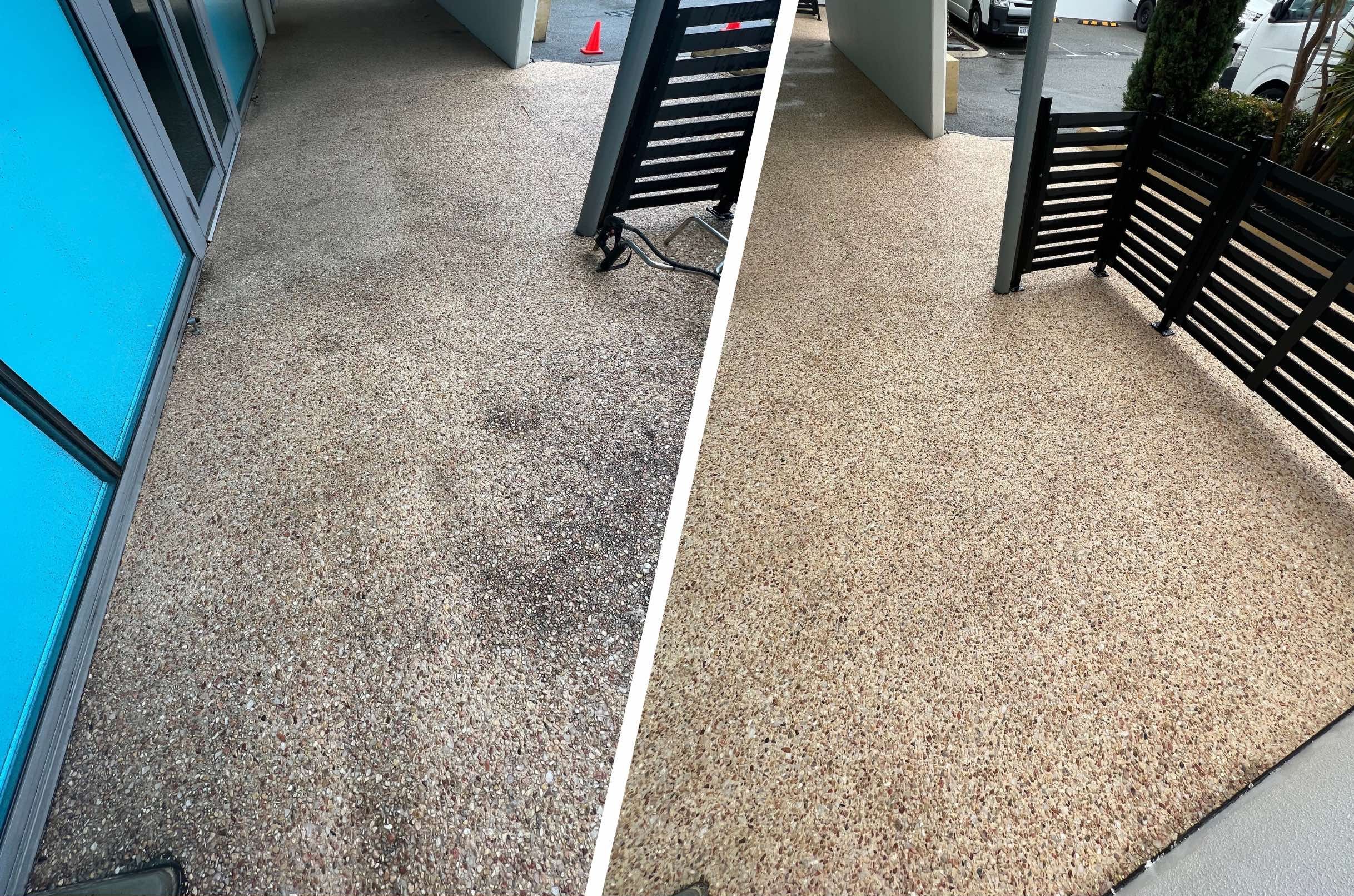
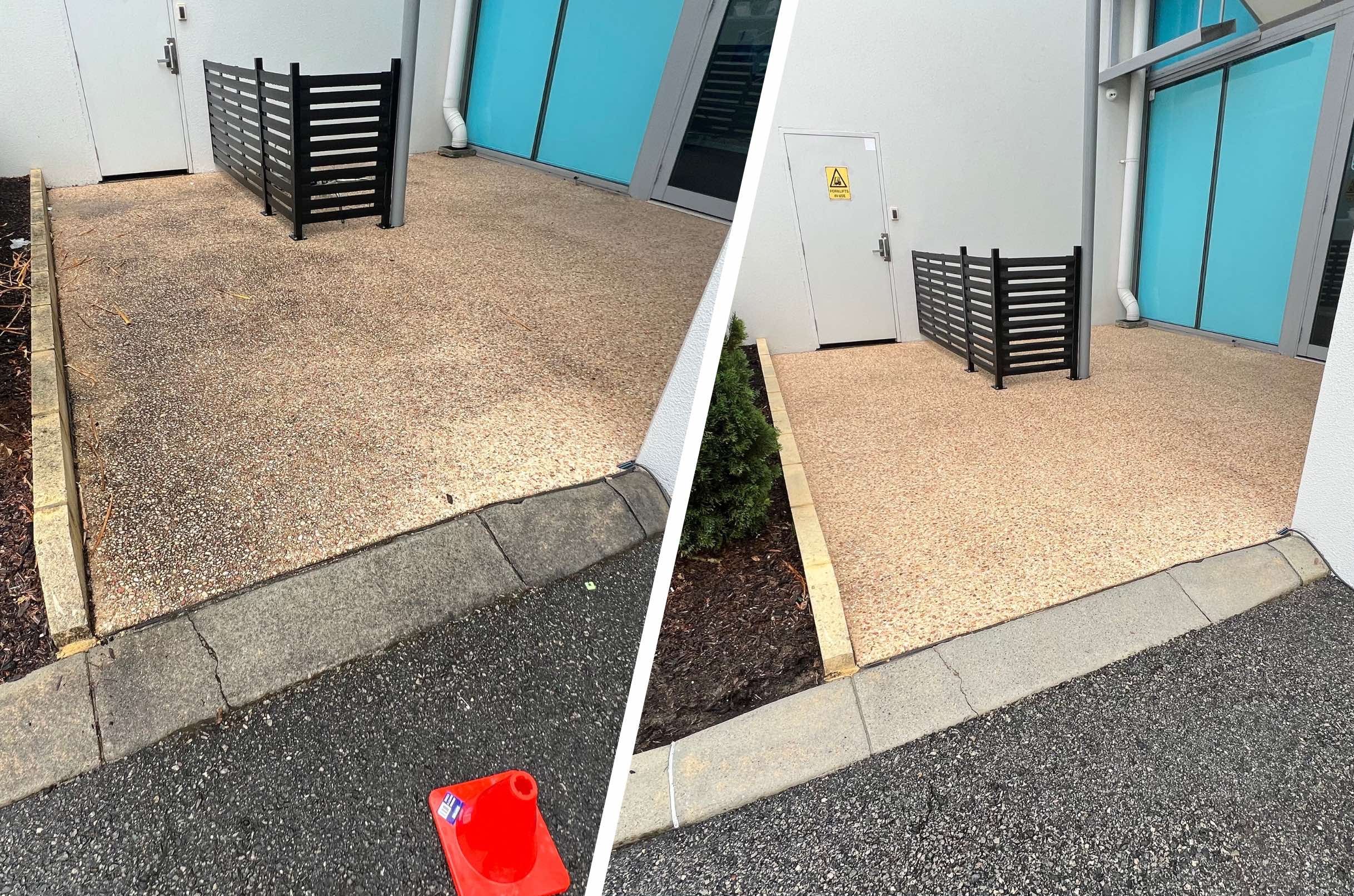
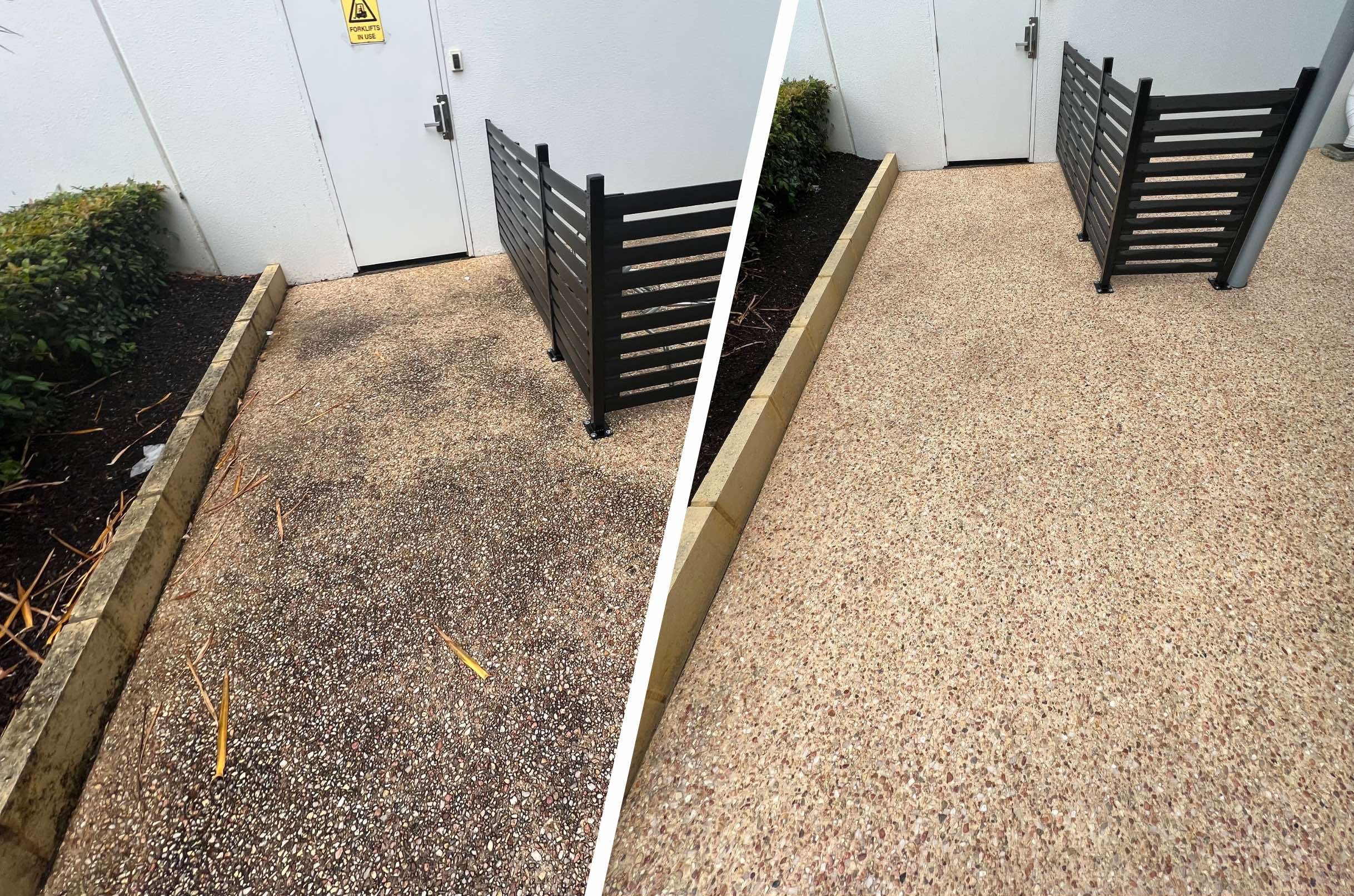
Driveways, pavers, concrete and paths brought back to life.
Cleaning takes off the growth and dirt. Sealing is what protects the surface and slows it coming back.
An unsealed surface drinks water in. It holds that moisture down in the pores and stays damp after the top looks dry — and that damp is exactly what the mould and algae feed on. Sealing fills the pores, so less water goes in and the surface dries out faster. The black takes longer to come back and doesn't get as bad when it does, and spills sit on top instead of soaking in, so you have a real chance at preventing severe stains.
It is not a magic coating that keeps the surface perfectly clean. It still needs washing — it just needs it less often, and it's easier to clean in the future.
I seal the same day I clean. It is an additional service that complements the cleaning.
Will high pressure damage my concrete?
Not when it's done properly. Concrete in sound condition handles it. What damages concrete is holding a narrow jet in one spot, or hitting a surface that was already spalling or flaking. If I can see the surface is failing before I start, I'll tell you rather than make it worse.
How long does a driveway take?
It depends on the size, how heavy the growth is, and how much detail work there is around edges and garden beds. I can give you an estimated time when I quote.
Will the black come back?
Eventually, yes — it's a living growth and Perth gives it plenty of moisture. Shade and leaf litter make it come back faster. Sealing the surface after cleaning is the thing that slows it most.
Do I need to be home?
No. I need access to the area and an outside tap. If you'd rather be there, that's fine too.
Do you clean up afterwards?
Yes. Everything gets rinsed down — no mud, dirt or water splatter left behind.
Call me now to find out more or book a quote — 0410 952 300




If your job is urgent, call me now on 0410 952 300


