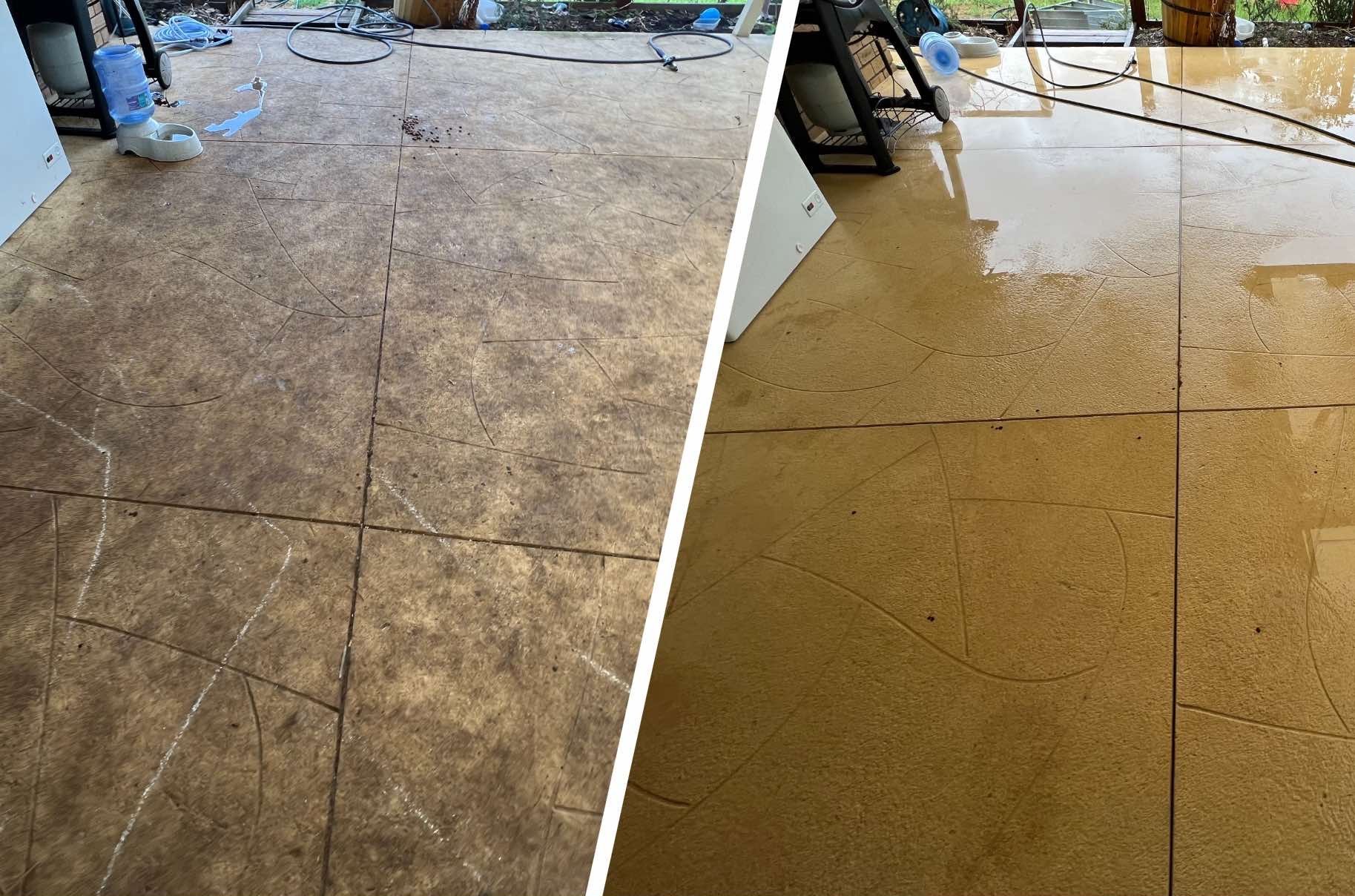
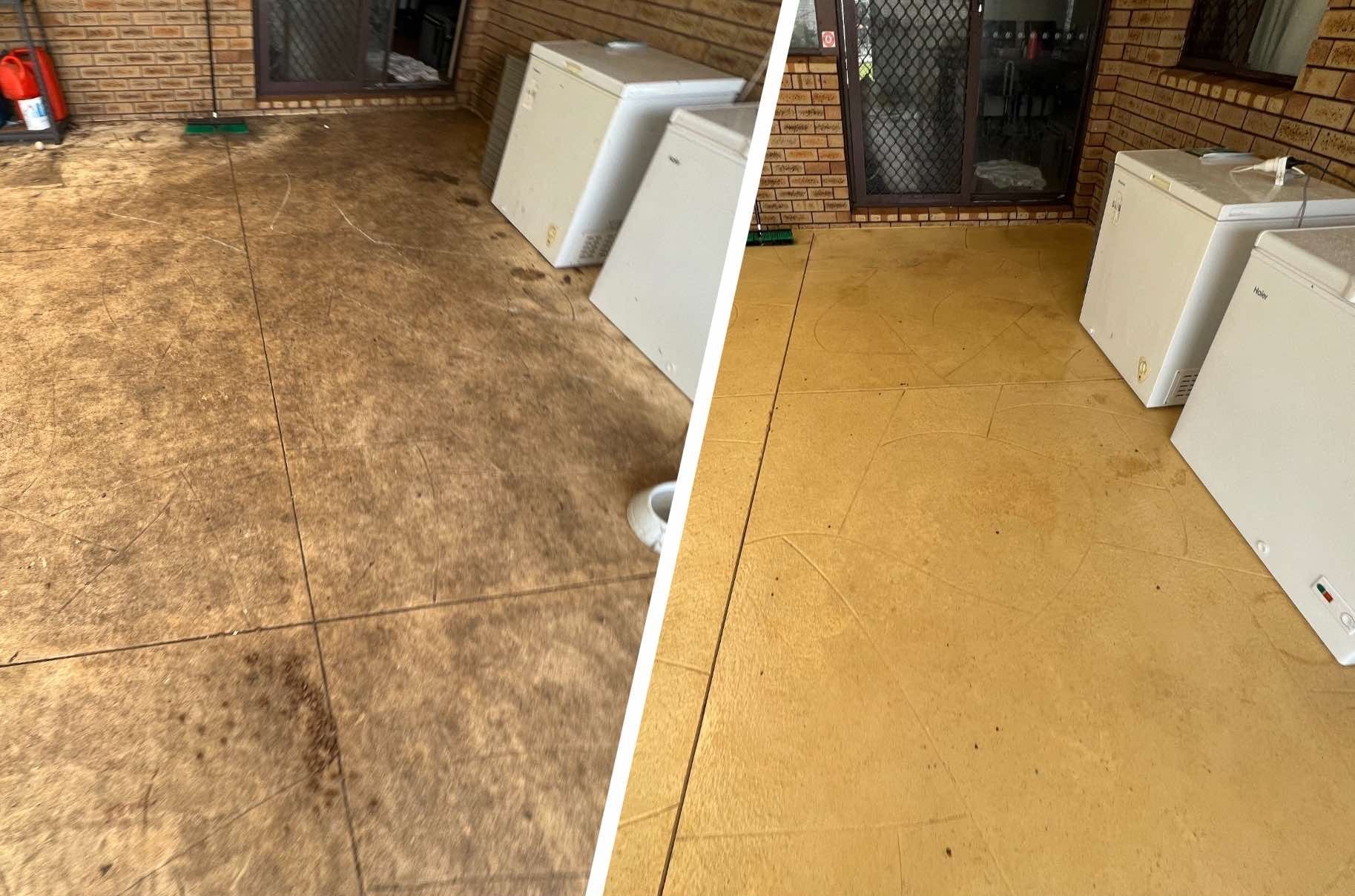
Liquid limestone that's gone black, green or blotchy, taken back to an even white.
Mould and algae grow in it like any concrete. It goes black mostly, and green in places — worst around pools, under trees and on shaded sides. Being a pale surface, it shows every bit of it.
Cleaning takes off the growth and dirt. Sealing is what protects the surface and slows it coming back.
An unsealed surface drinks water in. It holds that moisture down in the pores and stays damp after the top looks dry — and that damp is exactly what the mould and algae feed on. Sealing fills the pores, so less water goes in and the surface dries out faster. The black takes longer to come back and doesn't get as bad when it does, and spills sit on top instead of soaking in, so you have a real chance at preventing severe stains.
It is not a magic coating that keeps the surface perfectly clean. It still needs washing — it just needs it less often, and it's easier to clean in the future.
I seal the same day I clean. It is an additional service that complements the cleaning.
Is liquid limestone the same as limestone?
No. Liquid limestone is poured concrete with limestone aggregate in it. Natural limestone is quarried stone. They need different methods, and treating one like the other is how surfaces get wrecked.
Should it be resealed after cleaning?
It's worth considering on this surface more than most — it's pale and porous, so it shows growth early. Sealing slows that and makes the next clean easier. It's a separate job from the cleaning and priced separately.
Will it come up white again?
If the top layer is still intact, yes. Where it's already worn through, that part will always read differently — and it's better to know that going in.
Call me now to find out more or book a quote — 0410 952 300


If your job is urgent, call me now on 0410 952 300


